
Walking correctly on a trail means standing tall, pushing yourself forward from the back foot rather than pulling with the front one, and letting your arms swing naturally against your legs. On steep or uneven ground, you shorten the step and keep the knees soft. These habits cost almost nothing to learn and make long days easier on your back, knees and feet.
Why does the way you walk matter on a mountain trail?
Walking feels automatic, so most people never examine it. That is exactly why small flaws persist. A gait pattern that is slightly off can go unnoticed on a short pavement stroll, then show up as stiffness, a tight lower back or sore knees after hours on a hill.
Habits are often built away from the trail. Sitting a lot, and favouring one side while you sit, can leave your body with a default movement pattern that is a little out of sync. Over time that pattern can turn into discomfort, which is one reason a technique check is worth the effort.
Good form also reduces the load on your joints. Poor posture such as slouching or hunching places extra stress on muscles, tendons and ligaments, while an aligned body spreads the work more evenly. On a long mountain day, that difference adds up.
The trail raises the stakes further. Technique that is merely adequate on level ground becomes a real limiter once the surface is uneven.
What does good walking form look like?
Start with the stride itself. Many people walk by reaching into the space in front of them and hauling the body toward the front foot. A better mental picture is walking out of the space behind you: you push off the back foot and let the body follow.
The front-foot pulling habit has a cost. It tends to shorten the stride, leans heavily on the hip flexors and puts needless stress on the knees. Pushing from behind spreads the effort across larger muscles and keeps the stride smooth.
Here is a simple checklist to run through while you walk:
- Stand tall. Lengthen the distance between pelvis and ribs, and keep some space between collarbone and ears, so the spine stays extended instead of folded.
- Keep the head level. Look ahead rather than down at your feet or your phone. Staring downward loads the neck and upper back.
- Relax the shoulders. Roll them up, back and down so the arms can swing freely and the walk does not turn rigid.
- Engage the core lightly. A gentle drawing-in of the belly supports the posture without stiffness.
Your arms matter too. In a natural walking pattern, the right arm swings forward as the left leg steps, and the reverse. The swing should travel forward and back rather than across the body, because an arm that crosses the midline wastes momentum and twists the trunk.
Do not try to fix everything at once. Changing a deeply ingrained habit takes concentration, and piling several corrections together can overwhelm you and break your rhythm. Work on one cue for a few minutes, then add the next.
How should you place your feet and set your stride on uneven ground?
Keep the steps moderate
Over-long steps are a common mistake. Reaching far ahead can make you lock out the knee and then rely on the calf to drive you forward, which strains the lower back and neck. If you want to move faster, take more steps rather than longer ones.
On a trail this principle becomes stronger. Steep ground, loose surfaces and rough footing all reward short, controlled steps, because each foot lands closer to your centre of balance and you can correct a slip before it becomes a fall.
Roll through the foot
On gentle ground, a heel-first strike followed by a roll through to the toes is a sound pattern, and the sound of your steps can serve as feedback. If you slap the foot down hard, you are probably landing with too much force. Let the foot meet the ground quietly and then peel it away, heel first, from behind.
Adapt to the surface
- Ascents: shorten the step, keep the torso tall rather than collapsing forward, and let the back foot do the pushing.
- Descents: keep the knees soft and the steps short, and watch for heavy heel-striking that jars the joints.
- Loose scree: place the foot deliberately and accept a slower pace, since the surface shifts under load.
- Rooted forest paths: look a few steps ahead, not at the foot, so you can choose landing spots early.
If you use them, keep the same opposite arm and leg rhythm so the walk stays coordinated.
How can you practise before a big day out?
Technique changes stick best when you rehearse them somewhere easy. A short local walk, on a park path or a quiet street, is ideal because you can focus on your body instead of the terrain.
- March on the spot. Add the opposite arm and leg pattern, swinging the arms straight forward and back. This is also a good cure for an arm swing that crosses the body.
- Walk out of the space behind you. For a few minutes, concentrate only on leaving the back foot on the ground a little longer and peeling it away heel first.
- Lift and lengthen. Think of growing taller through the spine while keeping your gaze level and your shoulders loose.
- Shorten and quicken. Walk briskly using more, smaller steps, and notice how the knees feel compared with long strides.
- Check your sound. Aim for quiet foot contact rather than heavy, slapping steps.
Stay alert for early warning signs while you practise. Dragging or shuffling the feet, locking the knees straight, hunching the neck or staring at the ground all point to form that is worth correcting. If you have pain that persists even after you adjust how you walk, a medical professional can examine your gait and look for the underlying cause.
Treat the first few outings as experiments. Your normal walk will feel strange when you start changing it, and that is expected. With repetition, the new pattern settles in and eventually needs no thought at all.
Frequently asked questions
Is it better to take long steps or short steps when hiking?
Short, moderate steps are the safer choice. Over-long strides can push the knee into hyperextension and strain the lower back, and they leave you less balanced on rough ground. If you need more speed, increase your step rate instead of reaching further.
Should you land on your heel or your toes?
On moderate ground, land on the heel and roll through the foot toward the toes, keeping the contact quiet rather than forceful. The back foot then peels away heel first as you push forward. Heavy, slapping contact is a sign you are putting the foot down too hard.
Should you swing your arms when you walk?
Yes, let them swing freely and straight forward and back. The arm opposite the stepping leg moves forward, which helps momentum and balance. An arm swing that crosses the body wastes forward drive and twists the torso.
How do you know if your walking form is poor?
Common signs include shuffling or dragging the feet, locking the knees, hunching the head and neck, and looking down while you walk. Recurring stiffness in the lower back, neck or shoulders after walking is another hint. If pain continues despite changes in technique, have a doctor assess your gait.
Related reading
- How Fast Do Hikers Really Walk? The Arithmetic of a 20 km Mountain Day
- Hydration on the Hill: Sweat Rates, Sodium and the Myth of Drinking as Much as Possible
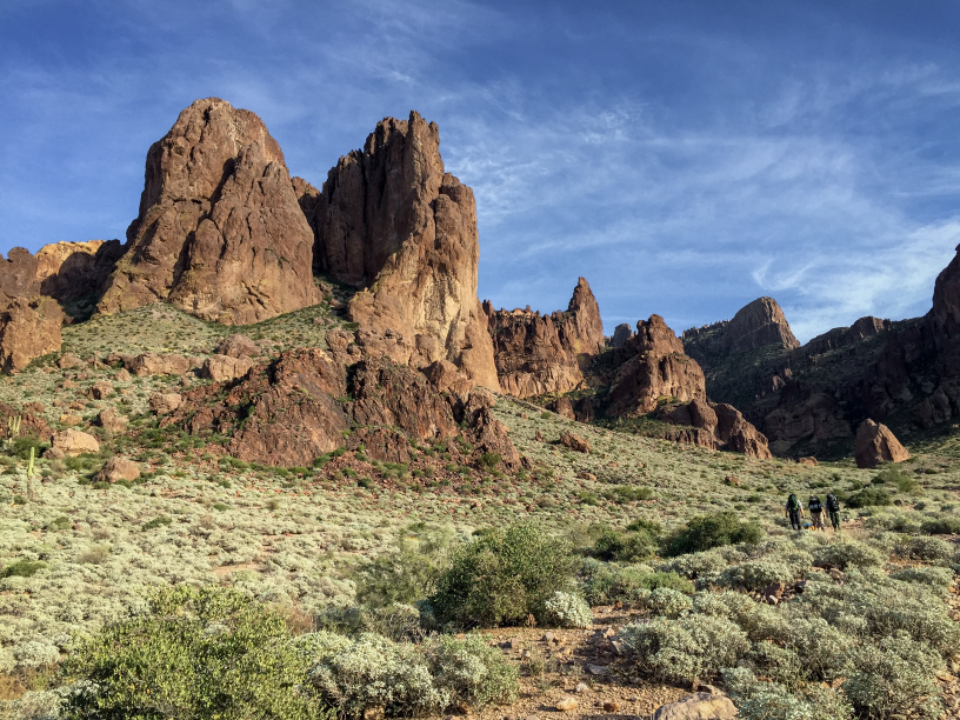
Photo: Hiking Hikers, by Matt Bango, CC0 1.0 (Stocksnap, via Openverse)